Game Designer
Leon Cederberg
Hello, my name is Leon Cederberg. I’m a 23 year old designer focused on narrative quests and enemy design.
I am a student on my second year at Future Games technical designer program in Stockholm. Here, you find some of my best work and see who I am.I enjoy making games with morally grey and dark themes, mystery, and blood and gore. These are themes I am interested in and design after.
--------------------------------------------------------
My skills are:General Skills:
* I am quick to adapt to new situations and not afraid to step out of my comfort zone.* Comfortable and fluent English speaker.* I am good at making friends.* A need for a creative outlet, video games, storytelling and world building.* I want to create game, I want to create emotions...
---------------------------
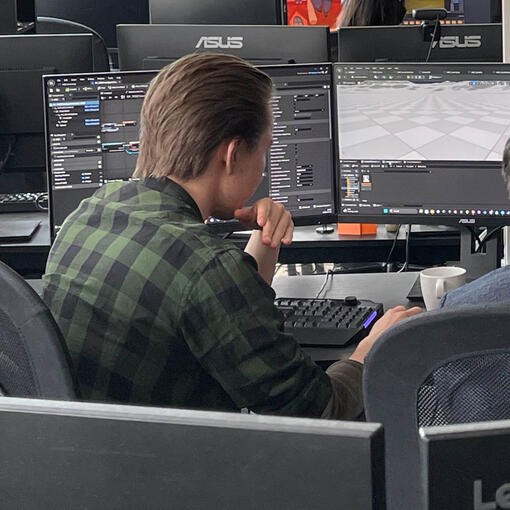
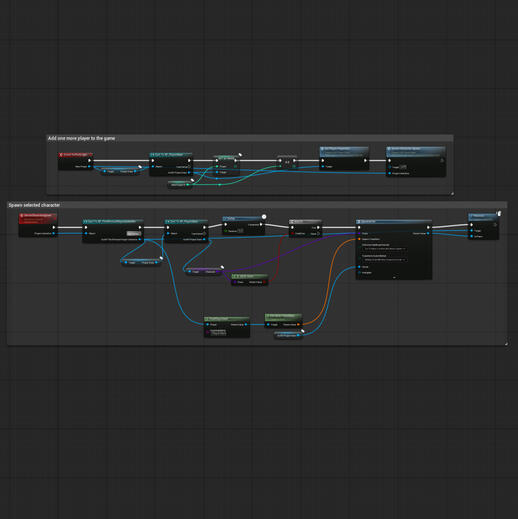
I have programming skills using blueprint visual scripting in Unreal engine and basic C# knowledge.Whit this I have experience working in Godot, Unity and a lot of experience with UE5.
---------------------------
Recently I have gotten in to 3D modeling and animation with Blender. You can see my graduation project where I made all assets except the character my self with animations, 3D modeling/Texturing, camera work and editing solely in blender. I have around 600 hours editing experience in DaVinci Resolve, but I wanted to try out edition in Blender.
-------------------------------------------------------------------------
Here you can find some of the games that I am most proud of.

-------------------------------------------------------------------------
Phone number: 070 828 23 14
Gmail: [email protected]
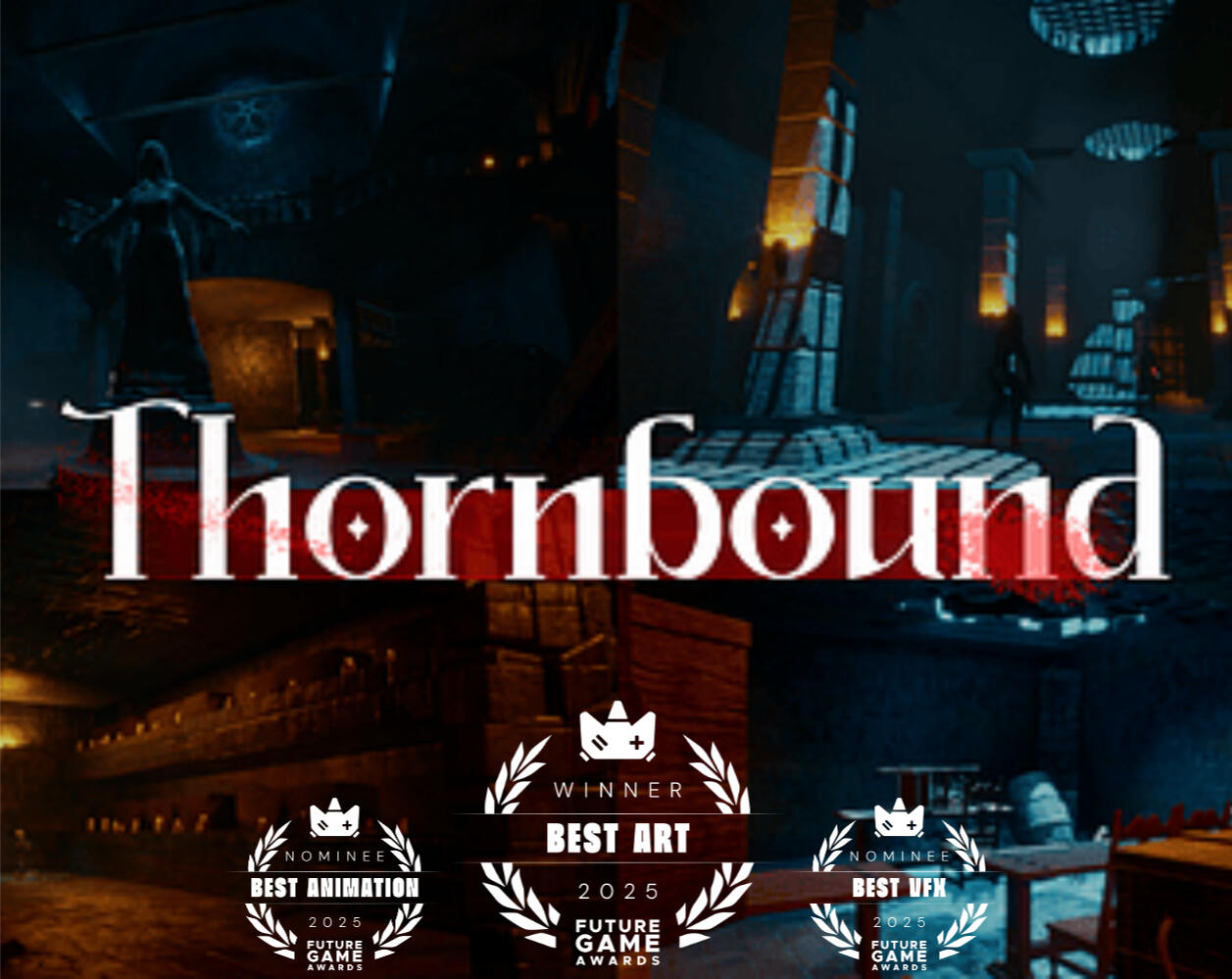
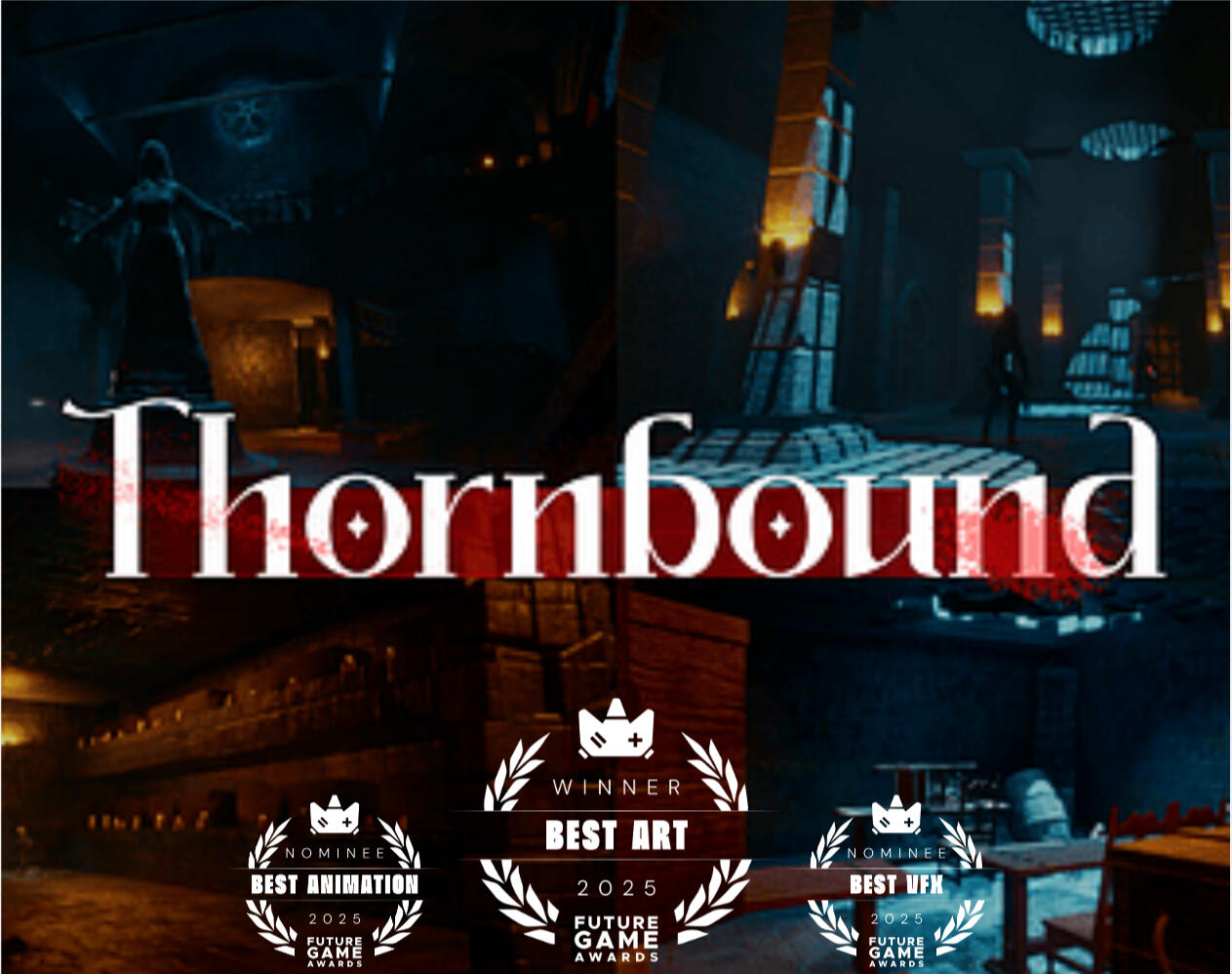
Thornbound was a UE5 game and my 3rd Game project at Futuregames, a game that I built together with a full team of 2 level designers, 1 audio designer, 5 artists, 4 programmers, 3 agile project managers over a period of 7 weeks.My roles was Project owners, Lead designer and technical designer.My goal with this project was to make a 30-minutes game to the quality of a AAA game.I designed the combat and enemies. I wanted the player to feel powerful but vulnerable. By making mana scarce and enemies tough, I achieved the desired result.During this project I learned to work and plan for a larger team with different disciplines. This was a growing experience for me that I will never forget.
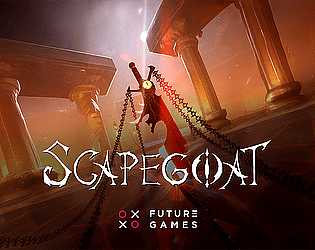
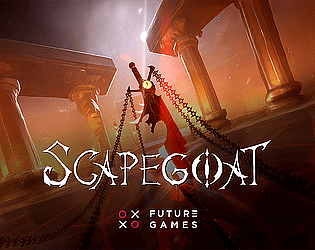
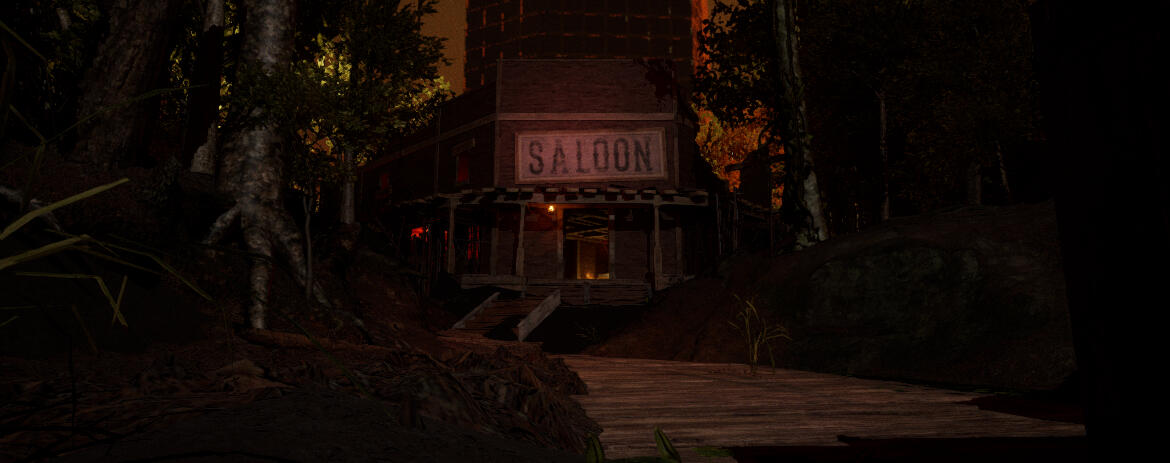
Scape Goat was a Unity game, and my 2nd game project, where I worked as a lighting artist, level and technical designer, as well as contributing to parts of the set dressing for the game.The game is about slaughtering birds on an island, a pure “turn your brain off and enjoy the dopamine” type of game.In this project, I got to try out level design and game artistry, which I found to be quite enjoyable.

God's Country was a UE5 game and the finale big game project I was a part of.
I worked as the team’s Project owner in this one as well.
As this was my last GP, I wanted to go all out. I knew what I liked and what I was good at.
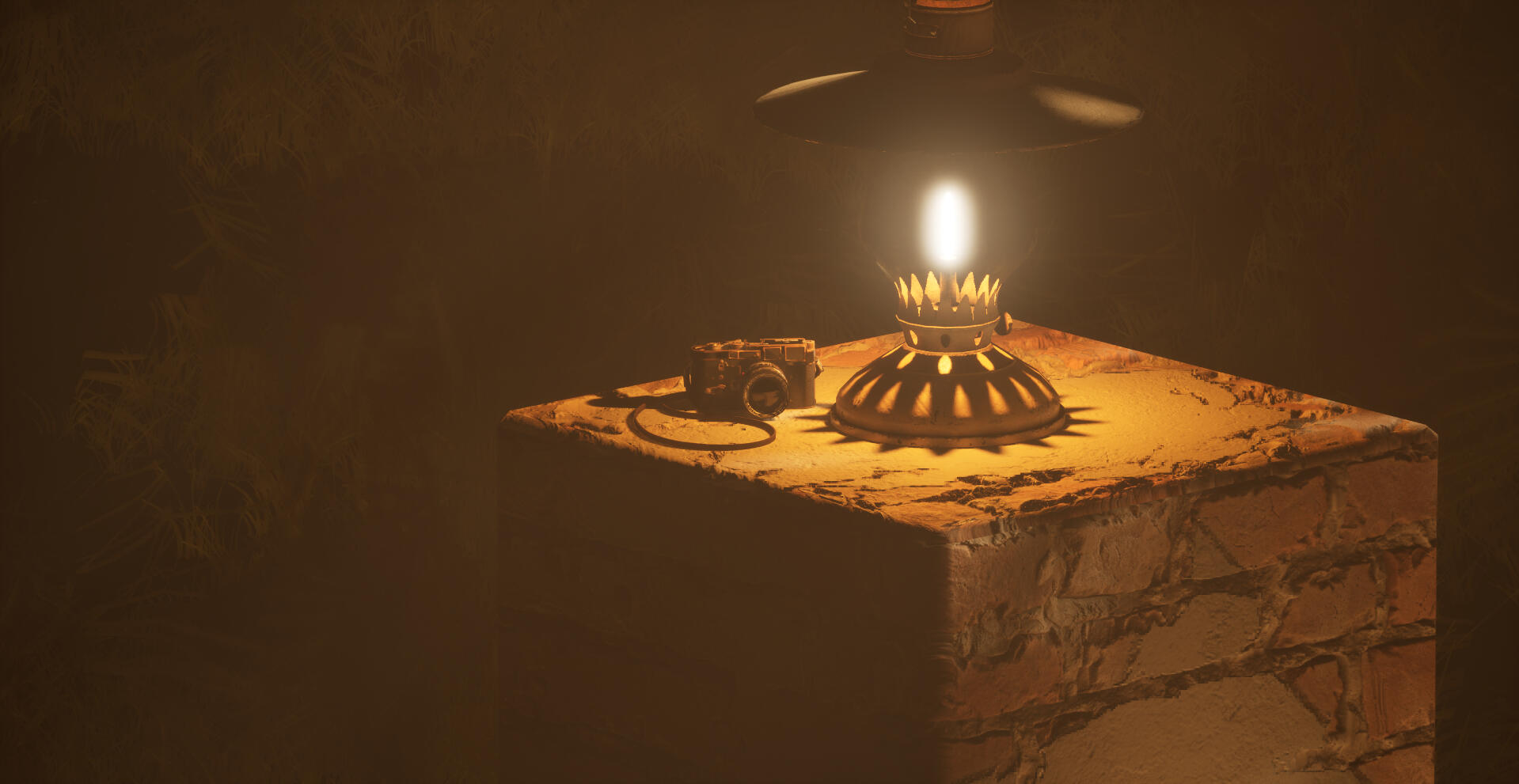
I was the enemy and combat designer. With this project, I wanted to challenge myself by creating a type of enemy that I had never seen before, with a unique mechanic.The design team had one week to come up with a prototype for a game concept, which we were then going to present to the rest of the school. We managed to scramble together a working prototype with some cool concepts, like a music box that could locate ghosts, a lighter with a flame that tilts towards the next objective, and a camera that could capture the image of a ghost.
I also managed to put a trailer together the night before I held the presentation, to generate some interest and hype for the project.Sadly, I soon realized that I needed to downscope this project a lot.This project was plagued by misfortune. Before it even started, I heard that two programmers had quit the school completely. Half of the team had side jobs that consumed a lot of development time, and there was a lot of sickness.The day before the deadline, we encountered a critical build error, which forced us to scrap a lot of features for the finale build.What can you do now? The game was not in a shippable state. It’s not the end of the world—we could always fix it later, right?
That would have been the case if I hadn’t had the brilliant idea of submitting our game to Game Town, which is an event where indie developers can present and showcase their games to the public.
Of the original eight team members, only I and two others dared to show up to the event to present a game that was in a horrible state.Not one of my fondest memories, but it was a huge growing moment for me.
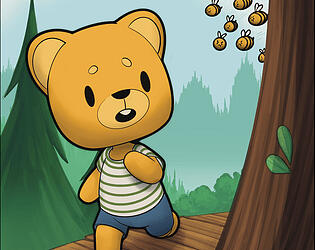
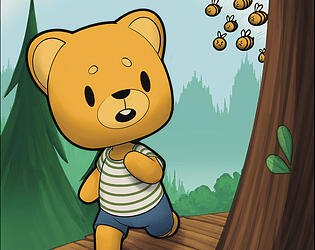
Beehind You! was a Unity game and my first group project, my first GP.
I worked on designing the obstacles in the game.We were tasked with developing a game for the Xbox accessibility controller, with a forest theme.It was short and with a small team, and no one really knew how the game development process was going to work.
I think this was when I first understood how fun game development could be and that this was what I wanted to do.
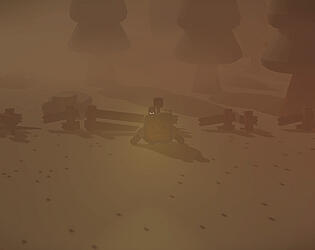
Nuke the Snow was a game I made in Godot.
I was tasked with making a game with strong a UX design.
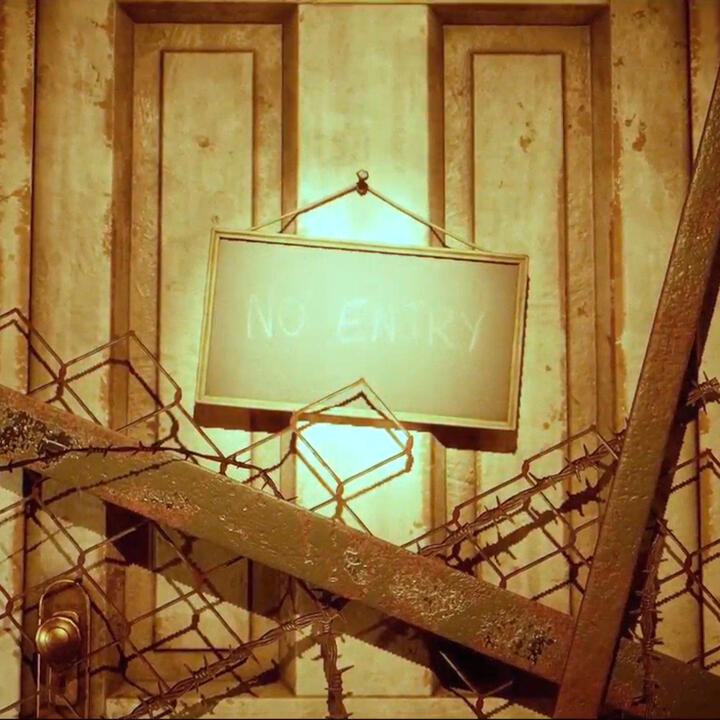
I decided to create a game with no maps or markers, guiding the player solely through the environment. I used colored lights to lead the player to the correct doors, and broken fences and thick forested areas to signal where not to go.
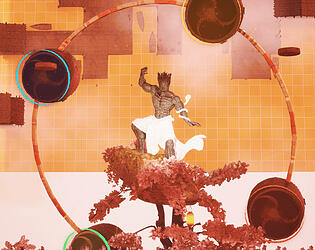
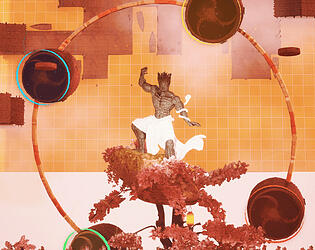
Oni no Taiko is a boss fight inspired by the Japanese lightning god, made in UE5.
In this project, I was the technical designer/programmer and the project owner.The team was random, and my group ended up being me, another technical designer, and three level designers.
To lighten the load for us technical designers, we decided to build just one boss inside a rotating cube arena.
We also did this to take advantage of having three level designers. We could make six differently themed playing fields, so each time the arena rotated, the player had to adapt to a new environment.Looking back, I realized I took on too much work myself.
I made the boss, his main attack, and a different environmental attack for each side of the cube.
But the biggest challenge was getting the whole cube to rotate without the game crashing or dropping to one FPS.
We didn’t want to fake the rotation, because we planned to utilize the environment on all sides to defeat the boss. The player needed to be able to shoot down stalactites or climb up the sides to reach different resources.To achieve this, I after the levels were completed took all the assets on one side of the cube: all the rocks, buildings, trees, etc., and merged them into one movable mesh. I noticed that Unreal struggles with moving many different objects at once, so in my head, if I were to just move six objects, one for each side, this would not be much harder on the PC than moving three highly detailed rocks.Of course, I had to turn off all the interactive objects when rotating the level, but with an idea and a couple of hours, I managed to get the cube to rotate in real time.This was a prototype project, so we were allowed to go as crazy as we wanted and fail as hard.
In the end, we managed to pull it off.
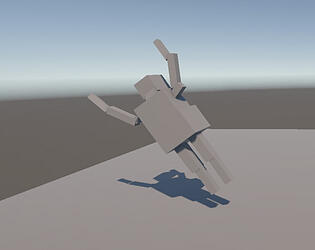
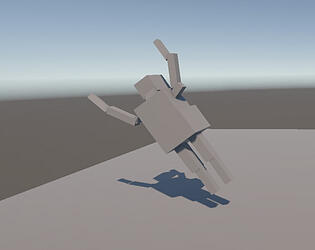
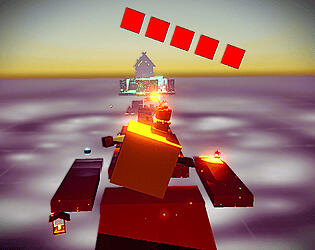
John Backflip was a prototype I made in Unity to learn how to animate.
John is built from 14 cubes, individually animated, allowing the player to jump and avoid oncoming boxes.A simple game, but an effective way for me to learn how to animate.
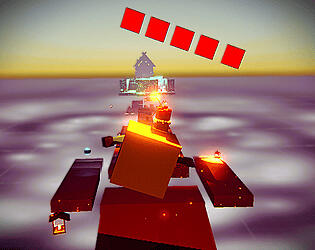
This was the first game I made, if we don’t count my application project.
It was the first time I opened Unity, and also the first project I did at Futuregames. To be honest, I thought I was going to fail and get kicked off.No! This wasn’t going to be my first and last project, so I got in early and stayed late to learn C# and Unity. In the end, I’m still here and now I’m applying for an internship.
It all worked out in the end, I guess.
Technical design Skills:
Quest design, Combat design, Enemy designThis is an example of an enemy from a horror game I made with some friends, called God's Country.This room contains three ghosts.Game mode
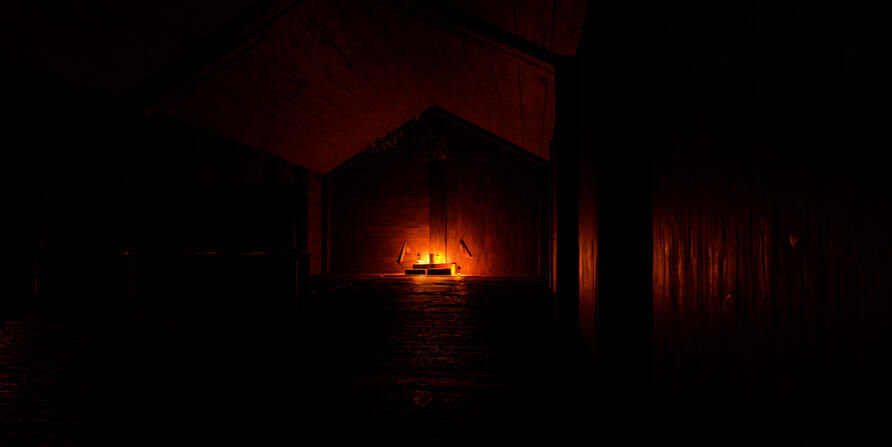
Developer mode
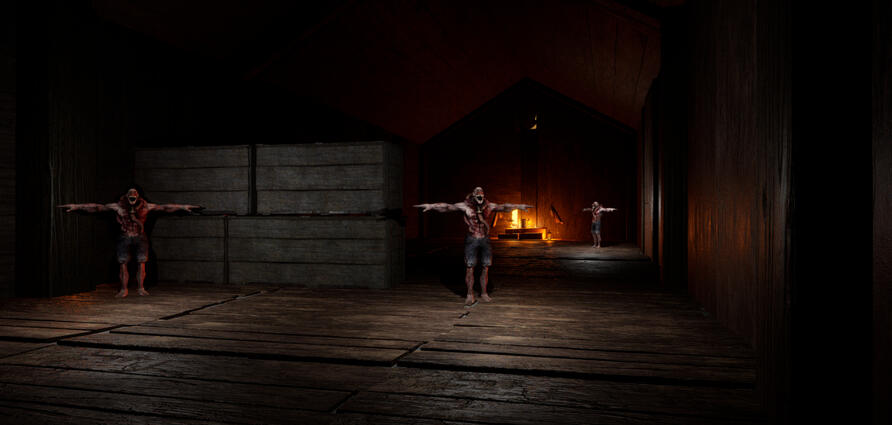
As you can see, they are invisible. I wanted to play with the fear of the unknown. The player should be aware of the enemy ghosts, but I wanted to make it as unsettling as possible. This keeps the suspense and lets the player’s imagination build up the monsters’ appearance in their mind. No matter how the monsters were going to look, I knew that by using sounds and unsettling environments, I could build up the horror more than if I revealed the monster early on.If the player walks into one of the invisible ghosts, it turns into a horrible monster that screams, shakes the screen, and kills the player, leading to a game over.
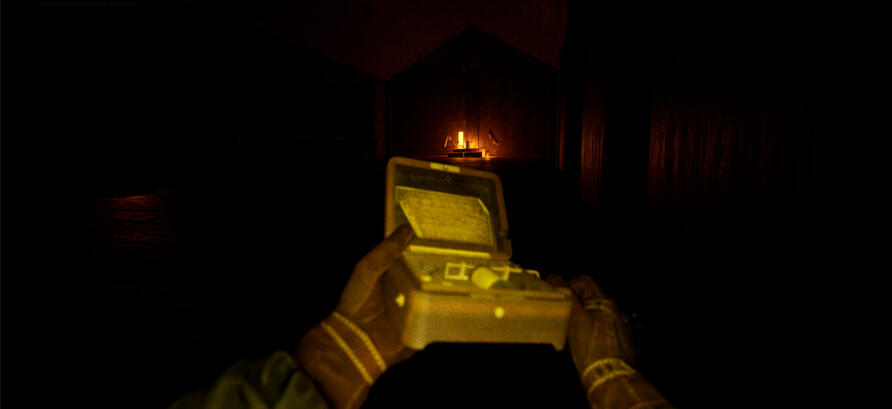
The tool that the player has to counter the ghosts is a music box, which plays an unsettling and mechanical lullaby, further building upon the empty but haunted environment. When the player enters a hostile area, the lighter is used as a waypoint. Its flame tilts toward the next objective, then blows out, lowering visibility. This causes the player to move slower and focus more on other senses, such as hearing. At the same time, this signals to the player that they have entered a room with ghosts.Here is where the music box comes into play. If the player plays the music box when close to a ghost, a static noise will begin to break the music from the direction of the ghost, helping the player navigate around the enemies.
Engine Skills:
UE5:
I am very comfortable working in Unreal Engine and I have a lot of experience working in blueprints. Although I have created games in Unity, Godot and even in the Fortnite creator, the bulk of my experience comes from working in Unreal engine 5.Unity and Godot:
I have experience working in Unity and Godot and a basic understanding of c#. I have an easy time adapting to new engines and circumstances.
About me:
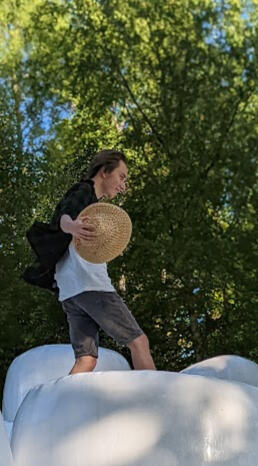
I am interested in tech and computers, and during the summer I do a lot of watersports like wakeboarding and waterskiing. I also have an interest in urban exploration. After finishing school (Business, Communication and leadership) I started a YouTube channel doing just that recording and editing videos of me and my friends sneaking into and exploring abandoned places.After a while, I ran out of abandoned places to explore, but I was still hungry for those unreal adventures.Game development allows me to be creative and technical, while building and experiencing the adventures that I was searching for.
-------------------------------------------------------------------------
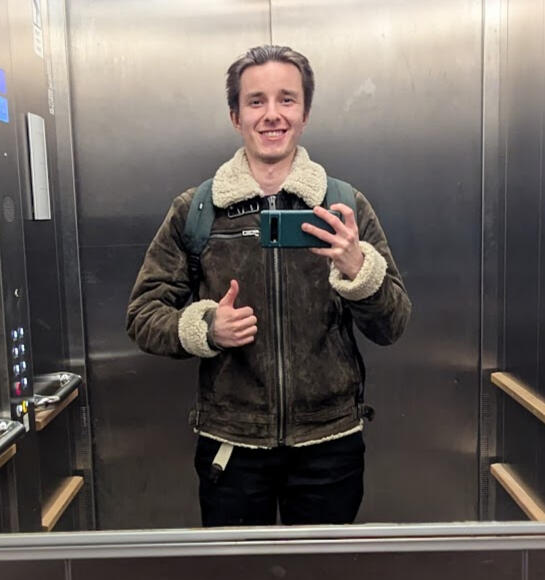
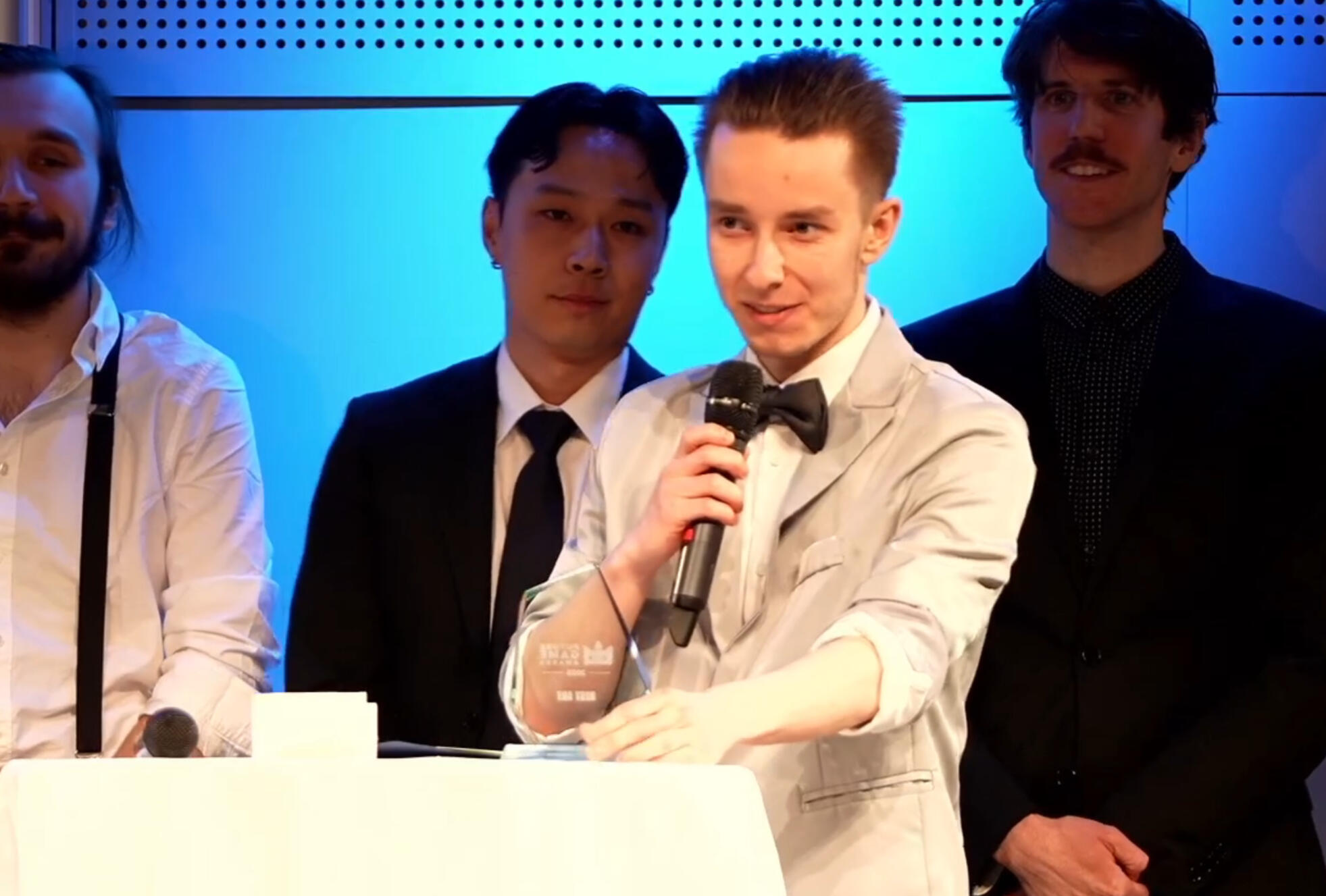
In January my game Thornbound got nominated in three categories at the Future Game Awards and we won the best art category. This is an image of me holding a speech after receiving the award.
During My time at Future Games I have written game stories with attention to characters personality, backstories and friction with conflicting personality.I have worked on and finished countless games of different types, with different teams varying in sizes from 17 to solo projects. Deep story driven games, hack and slash, a family friendly game for kids using the Xbox excitability controller, I have worked on a fishing game and a multiplayer game. I have published some of them that I where extra proud of.One of the great thing with game development is getting to collaborate and work with the three disciplines art, programming and design. As a game designer I believe that it is important for me to have knowledge and skills with in programming, art, animation and VFX as well as design. This makes it a lot easier for me to know what is possible and for me to help out and understand the workflow, hardships and how to communicate within the different disciplines. From consent to development to final product.
Phone number: 070 828 23 14
Gmail: [email protected]
Artistic Skills:
Captain's Log.
This is part of my graduation project from Future Games. The goal was to produce a trailer with self made assets only, apparat from the character.
I had previously written the narrative for an arctic exploration game, where two players on separate ships races to be the first to discover the Northwest passage. It is a choose based game where the captain of each ship will have to balance what is best for the crew, selfish chooses for the captain or what is best for the grater good of the expedition.
The concept trailer pick up at the end of a failing expedition.
The trailer is built, recorded and edited by me, using Blender for every part of the prosses.
This project gave me skills in animation video production within Blender and 3d modeling.I wroth characters, personality, motivations and goals for the game 6 months before starting work on this project.
I have had to iterate on my original story to narrow the perspective down to just one event and character's struggles.
The game was original leaning more into the conflicts between the crew of the two competing ships, but I wanted to shrink the world down to focus in the climate and mental load of sailors of the 1800.I am pleased of how it turned out and that I got to put the feeling I wanted for the game in to something easily portrayed like a concept trailer and that I got to focus on learning and polishing the product to the extent that I did.

Video editing (DaVinci Resolve)

Game set dressing
Lighting design/artist